
Slow Down and Keep Time
It's Preferable to the Alternative

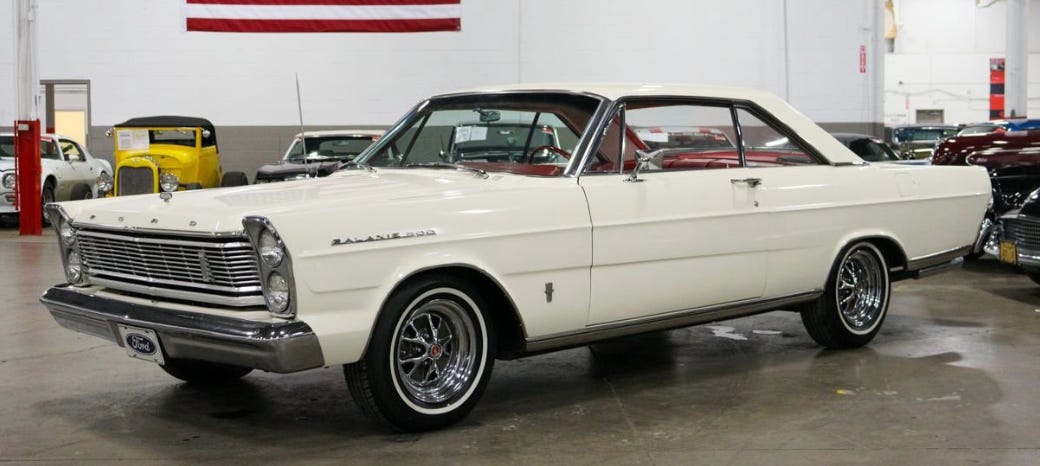
My grandmother drove a 1965 Ford Galaxy 500 with a red leather interior. Key slot on the dashboard, which was cool. On visits to her West Side home in Milwaukee as a kid I’d sneak into her garage where she kept it in pristine condition. In the musk of the dark garage, my mom’s childhood bikes stored neatly like museum pieces from the Depression, I’d settle into front seat behind the wheel and drive miles of road in my mind. Throwing my right arm over the seat, I’d Reverse the car backward down the driveway, throw it into Drive, and then off we’d go, out into the street, and rolling on down toward adventures of the mind but in fact going nowhere fast. Or maybe just with no particular place to go. Each visit, in whatever season or time of year, I’d steal away to the garage, settle into the car, however briefly, as a matter of keeping time. Each time seeing better over the wheel. Each turn my feet feeling closer and closer to the gas and the breaks. Each imagined trip exploring parts of Milwaukee and the countryside with greater confidence, a deeper sense of adventure, maybe even some trouble mixed in. It was all a matter of keeping time; then moving closer to now.
By the time now came around, I had a car of my own — my mom’s old 1972 Chevy Bel Air. She was trying to make a living sell real estate and had gotten a Datsun 280Z to impress her clients with, leaving her four door heap of Baby Blue steel and chrome to me for my own adventures — mostly getting to and from school, basketball practice, Dad’s apartment. One freezing cold snowy winter morning, while driving to school with my sister, the transmission just gave out and the car stopped dead in its tracks at a light. Plows and other cars maneuvered around us as we groaned in place until miraculously, the car started moving again just enough to finish the ride to school. I wondered if all those hours with the Ford in Grandma’s garage was a kind of payment plan on actual travel, albeit the least adventurous kind, to safe harbor, those few years later.
Grandma grew too old to drive and though it took some convincing she gave up her license. The car stayed in the garage, and then after she died, the car was sold, a transaction we kids and cousins later kicked ourselves for, but that’s how it goes with these things at times of emptying and loss. Riding back from her burial I remember thinking, “all the way home I held a grudge” that the car wasn’t mine.
===
My sister once wrote a beautiful sketch of Grandma, recalling the rare occasions when Grandma took the car out for gas or a spin “just to clear the pipes.” She’d get offers from strangers to buy the car. “Get in line,” she’d say, and move on. That’s how Grandma went through life. Forward moving, rooted in the past and her traditions, devoted to her family but determined to get to Heaven, where she’d be reunited with her long lost love, Norman, who died too young in 1939, leaving her to raise her daughters alone.
Get in line. We’re all trying to get there. A no-nonsense kind of lady.
“It’s weird,” I once commented to my mom, as she lay dying of cancer, nearly twenty years after Grandma had died, “To Grandma, Norman is like Jesus, waiting for her up in Heaven.”
Mom scrunched up her face, shot me a sideward glance as if to say, “Who talks to their dying mother this way?” but then leaned in to the idea.
We were talking about death and the afterlife because my mom had earlier declared to us that she wanted to be cremated, which I opposed. I wanted a chance to convince her to be buried, near Dad, whom she had divorced, but nevertheless in family plots that we and her grandchildren could visit long after she was gone.
“Don’t bury me when I die. Burn me up. These fucking chemicals are making me sick.”
“Mom.”
“Besides, the idea of burial makes me claustrophobic. Who wants to be closed in a box, then put six feet underground?”
“You’ll be dead.”
She stared at me, shaking her head in disbelief. And then she told me this.
“I can still remember my father’s funeral like it was yesterday. I was six years old and his service was open casket. My aunt insisted I give my father a kiss goodbye and when she lifted me up to his casket, I could see the bullet hole in his head, covered up with make-up. It was unmistakable. This is why the idea of burial revolts me.”
“That’s horrifying,” I said. And then explained that Jewish burial customs are very different. I explained the traditions of tahara, of ritually cleaning her body, gently wrapping it in a simple, linen shroud and then from that time forward there would be no viewing of the body. She would be buried by her children and grandchildren, beneath the shade of tree, in a cemetery with a view toward Brewers home games, in an easy spot where we could always visit.
“Burial is a return to rebirth,” I said. “The earth will take you back. And we will say your name every time we visit. And one day you’ll be visited by great-grandchildren you’ll never meet and they will say your name, too. You will be with us forever.”
She held her chin in her hand and nodded at me slowly. Her eyes looked past me, maybe even to the road ahead.
After she agreed to be buried she said, “I feel like I just went through an argument at the Supreme Court.” I took it as a compliment.
===
Terminal illness; death. They slow you down. When you’re young, you’re always in a hurry. My daily prayer slows me down these days, which is far preferable to the alternative.
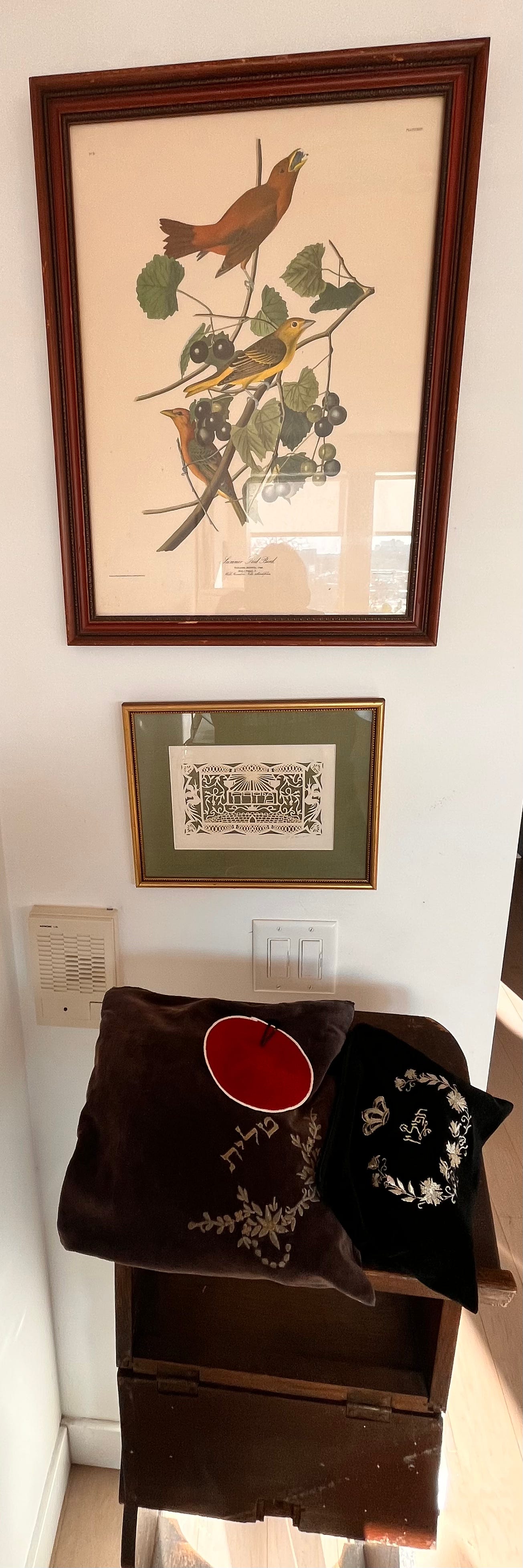
Wrapping myself in a tallit and wearing tefillin, I feel bound in the present, rooted in the past, eyes on the future. I make a vow each morning:
וְאֵרַשְׂתִּיךְ לִי לְעוֹלָם, וְאֵרַשְׂתִּיךְ לִי בְּצֶֽדֶק וּבְמִשְׁפָּט וּבְחֶֽסֶד וּבְרַחֲמִים: וְאֵרַשְׂתִּיךְ לִי בֶּאֱמוּנָה, וְיָדַֽעַתְּ אֶת־יְהֹוָה:
And I will betrothe you to Me forever; and I will betrothe you to Me in righteousness, in justice, in kindness and in mercy. And I will betrothe you to Me in faithfulness and you shall know the Eternal. (Hosea 2:21-22.)
Facing East, toward Zion, this daily betrothal is one way we Jews renew the covenant with God each day. Slowing down to justice, to kindness, to mercy at the beginning of the day so that it might guide our steps throughout, as the sun moves across the sky.
Justice, kindness and mercy are three words I would always use in describing my mom. While the gross negligence of justice in the world upset her, she always treated others with kindness and mercy. She had her imperfections as we will all do; but she was a generous and gentle soul.
===
But the car? Ah, well. In a perfect world, I’d keep it in storage in Milwaukee and drive it to the cemetery for each visit home. Clean out the pipes, as it were, turn corners with care, unload a fresh set of flowers from the trunk for planting in the spring and leave stones stored in the glovebox at her grave, to show her that we were there. Leaving the old boneyard at the end of each visit, I’d floor it and burn rubber, just to let her know that despite being a serious kid, I do like to have fun.
My rabbi, thanks for the comments on burial versus cremation. I found them very helpful. And, I thought of you as I listened to Richard Davis with Eric Dolphy this afternoon. Very spiritual. All the best Sandy.
What a poignant post. Having been raised in Middletown, CT, where my parents, sister, and numerous friends are buried, I convinced my husband, a non-Jew, to be buried in the local Jewish cemetery—actually in an area adjacent to the main “Jewish” cemetery where “mixed couples” are welcome. We visited the cemetery in autumn to select our plots, a very odd experience. Having end of life plans in place is a gift my mother gave to me: no muss/no fuss, because Selma was practical and organized. We hope we are doing that for Max and Emma too. (By the way, we had the same Galaxy 500 when I was growing up, but ours was black with a red interior. Snazzy!)